Drainage That Actually Prevents Flooding
Drainage services in Cedar Rapids for yards where water pools near the foundation or backs into basements
Standing water against a foundation is not a cosmetic problem—it creates hydrostatic pressure that forces moisture through concrete and block walls, and over time, compromises the structural integrity of the slab. Cedar Prairie Grading LLC provides residential drainage services in Cedar Rapids designed to redirect water before it reaches the foundation or enters the basement. The work addresses root causes: how the yard is graded, where downspout discharge lands, and whether subsurface or surface water has a clear path away from the structure.
Cedar Rapids receives significant rainfall across spring and early summer, and flat or inward-sloping lots—common in older residential neighborhoods—give that water nowhere to go except toward the house. Cedar Prairie Grading LLC approaches each property by evaluating the full drainage picture: yard slope and low points, downspout termination locations, soil compaction, and whether existing drain tile systems are functional or have collapsed from age or root intrusion. Each of these factors determines which combination of solutions will move water effectively and keep it moving over time.
Request an on-site evaluation to identify where water is entering the yard and what specific drainage conditions are contributing to the problem.
How Drainage Services Address Water at Every Level
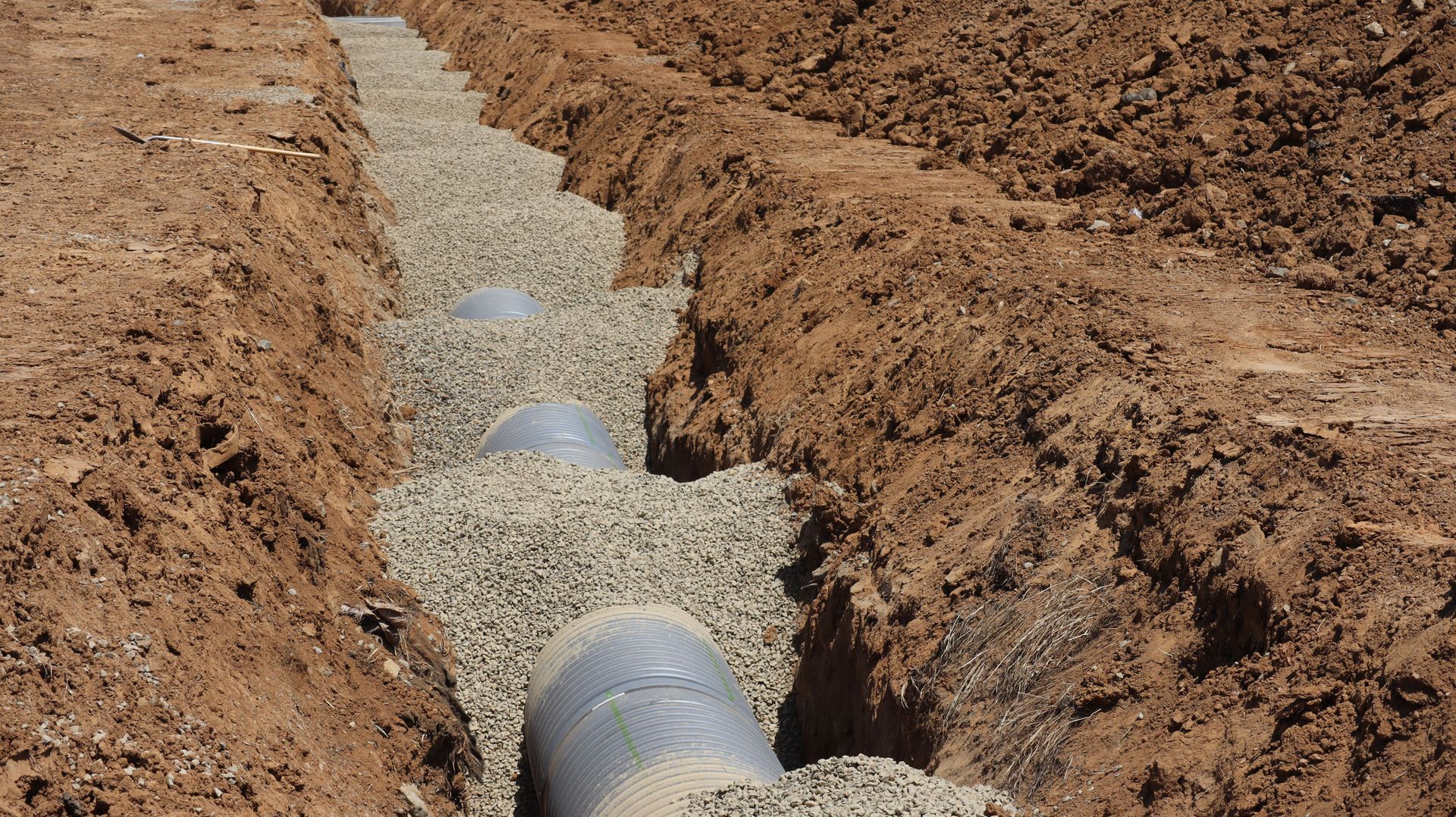
Effective residential drainage operates on three levels simultaneously: surface grading to direct sheet flow, collection systems to capture concentrated runoff, and subsurface tile to handle water moving through the soil. Yard grading reshapes the topography around the home so the ground slopes away from the foundation at a consistent pitch—typically the first correction made when water is pooling near the structure. Surface drains and downspout extensions are installed to capture water before it has the chance to saturate the soil immediately adjacent to the foundation wall.
After drainage work is completed, the visible changes are immediate and measurable: water no longer stands in low areas of the yard during or after rain events, downspouts terminate far enough from the foundation that discharge doesn't re-saturate the soil at the base of the wall, and basement walls dry out as hydrostatic pressure is relieved. Drain tile systems—installed at or below the footing level—intercept groundwater moving laterally through the soil and direct it toward a daylight outlet or sump basin, eliminating the source of seepage that surface corrections alone cannot address.
The specific combination of services depends on the property's existing conditions. A yard with a single low spot may only need regrading and a surface drain. A basement with chronic seepage along the base of the wall typically requires drain tile alongside grading corrections. Some properties need all four components—grading, downspout management, surface drains, and drain tile—working together to fully control water from multiple entry points. Cedar Prairie Grading LLC determines the appropriate scope after evaluating what the site actually shows, not from a standard package applied uniformly.
Cedar Prairie Grading LLC works through each component of a drainage problem methodically—starting with what the yard shows during and after rain—so the solution addresses actual conditions rather than assumed ones. Connect with the team to discuss what you're seeing on your property and arrange a site visit.
Common Questions About Residential Drainage
These questions address the situations and decisions that come up most often when Cedar Rapids homeowners are dealing with yard water problems and foundation moisture.
What is the difference between a surface drain and a drain tile system? A surface drain collects water sitting on top of the ground—at low points in the yard or where downspouts discharge—while drain tile is a perforated pipe buried below grade that intercepts water moving through the soil toward the foundation. Both serve different purposes and are often installed together when a property has both surface pooling and subsurface seepage issues.
How does yard grading actually redirect water? Grading adjusts the slope of the soil so that rainwater and snowmelt flow away from the foundation rather than toward it, typically achieving a minimum fall of six inches over the first ten feet from the house. In Cedar Rapids, where freeze-thaw cycles shift soil grade over time, re-establishing proper pitch often corrects drainage problems that developed gradually over several seasons.
When does a downspout extension become part of the drainage plan? Downspout discharge landing within three to four feet of the foundation reintroduces roof runoff directly into the saturated zone around the footing, which defeats grading corrections made elsewhere on the property. Extending discharge further out or connecting downspouts to underground pipe that outlets at a remote point is a standard component of a complete drainage solution.
What causes drain tile systems to stop working? Drain tile installed in Iowa clay soils can collapse from soil pressure over decades, become blocked with fine sediment, or be infiltrated by tree roots, all of which stop lateral groundwater from reaching the outlet. Identifying a failed system typically requires camera inspection or excavation to confirm whether the pipe is intact and flowing.
Why does basement seepage often get worse in spring specifically? Spring combines rapid snowmelt with heavy rainfall at a time when the ground is still partially frozen, creating surface runoff that cannot infiltrate and instead concentrates at the foundation. Cedar Rapids properties with minimal positive grade around the structure are especially vulnerable during this period because there is no slope to direct that concentrated runoff away from the wall.